


If you want to make a living from your work, begin by making time to plan – above all, to define your destination and the time you are ready to invest for it.
Only when you know how many artworks need to be sold, at what price, through which channels and what kind of infrastructure is required, are you able to create a path towards that outcome. These questions are not a concession to commerce.
I will elaborate this more in one of my coming essays. Suffice for now to dwell on the building stone for it.
A sustainable creative career is built backwards. The desired outcome determines the decisions and the requisite time.
Time is not simply the medium in which art is made. It is one of its most decisive conditions. Every hour invested in creating work is an hour unavailable to every other role a creative inhabits.
This essay begins where my first essay on procrastination ended. The deeper challenge is not delaying the work. It is sustaining several serious roles without allowing attention, identity and intention to fragment.
The question, then, is how to build a life in which every decision moves towards the same horizon. Every meaningful decision about creative practice is ultimately a decision about how to spend your time.
Time is precious. Like everyone else, I have only twenty-four hours in a day, and my lifetime is limited. Time is finite and measurable. The mind is neither.
The challenge of a multi-passionate life as a creative is not simply time management. It is the management of attention, identity and clarity.
You cannot fully assign a value to an artwork, even though you can count the hours you spent creating it. Think of everything required for a single piece: the research, the making, revising, logistics, framing and all the invisible decisions and thinking processes inside you that happen along the way. At a certain point, the more time invested, the less payable the work becomes in a conventional economic sense.
Yet an artwork contains multiple dimensions of time.
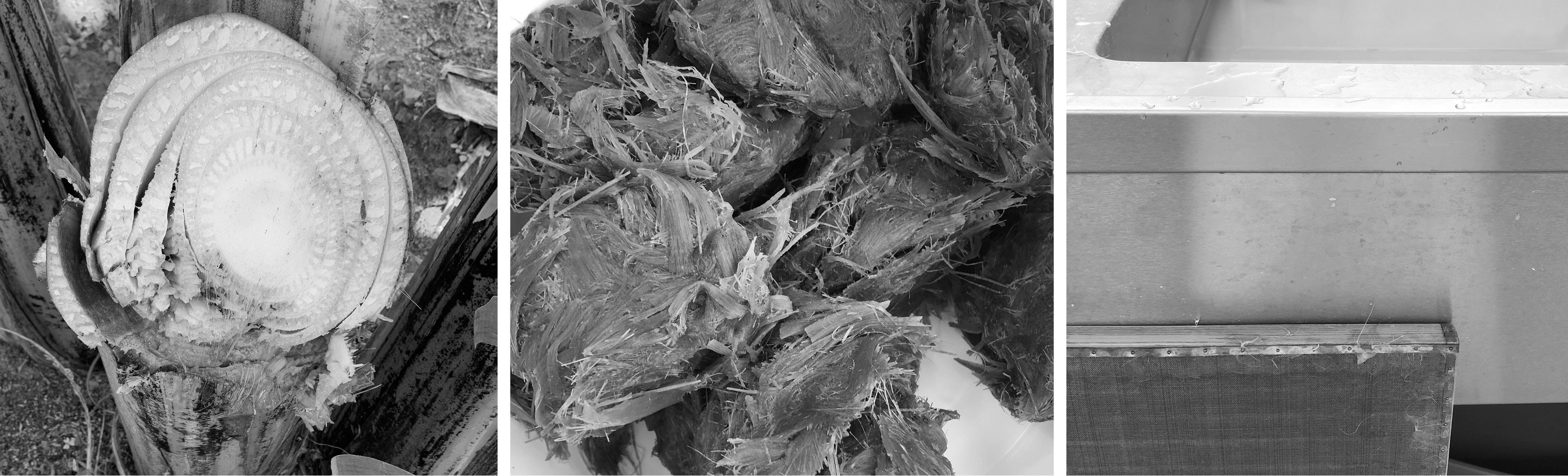
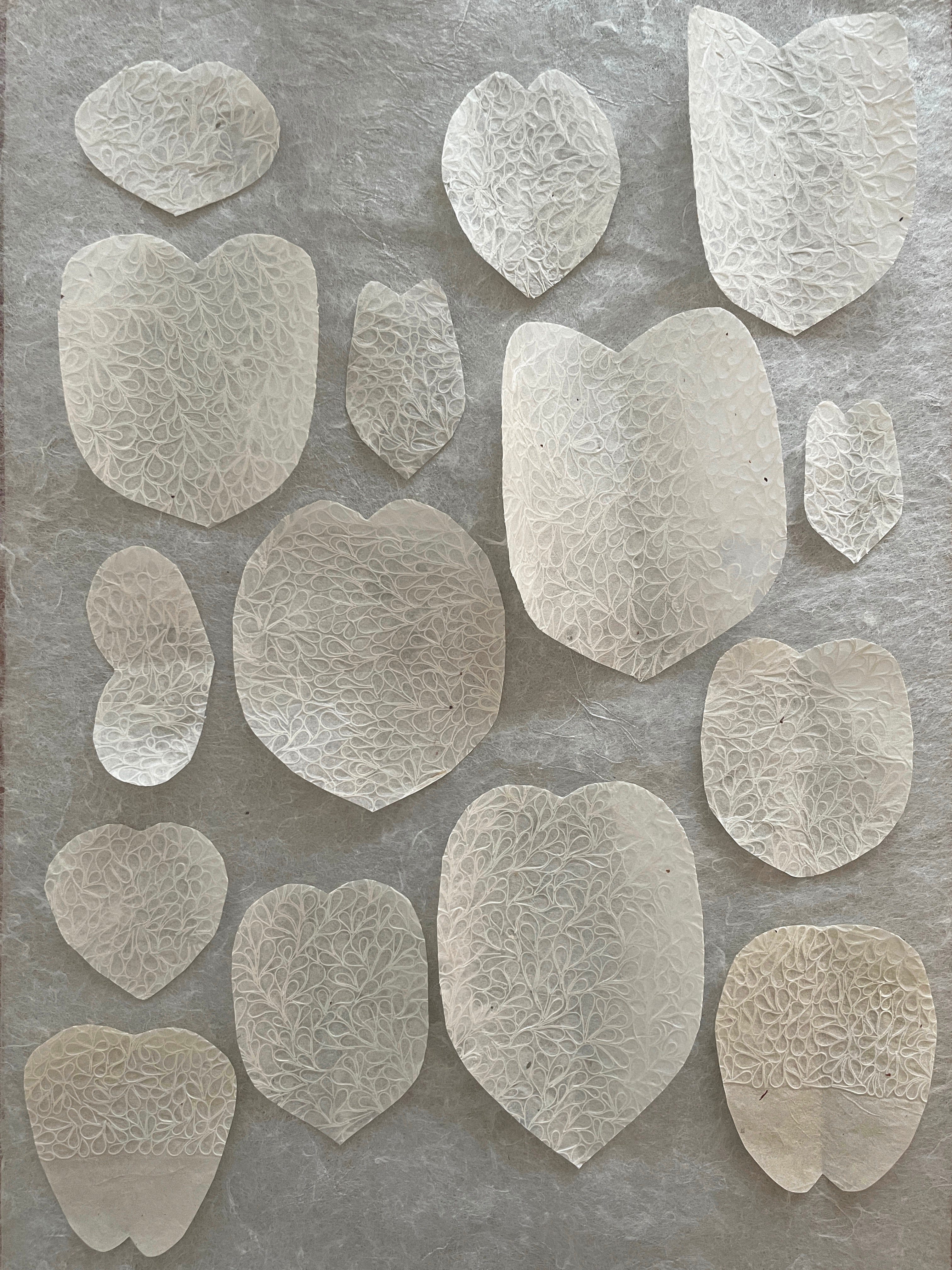
For my art, for example, there is the time needed to produce the handmade paper, then the time required to create the artwork from it. There is also the time nature needed to grow the plants whose fibres I use.
Perhaps this is why it can be so difficult to answer the simple question: What do you do?

When roles collide
It is already challenging to describe my art. But the work I do beyond it also refuses to fit into one category. Consulting, management, corporate design and fine art coexist within the same person. To an outsider, these may appear to be separate careers. To me, they are different expressions of the same creative mind.
The difficulty lies in moving between the different roles.
Most productivity advice assumes a single direction of travel: one goal, one project, one identity. Many creatives operate differently. Their work resembles a city more than a train line: multiple systems running simultaneously, different districts with different purposes and constant movement between them.
On some days, I am an artist. On others, a consultant, manager or the person who writes these essays. Each role requires a different skill set, language, perspective and decisions.
The work itself is rarely the hardest part. The transition is.
A multi-passionate life can feel like living several lives at once. The skill lies in recognising when your roles can inform one another and when each requires its own space. Internally, everything should enrich everything else. Externally, everything must remain understandable.
Sometimes, different worlds or fields appear unrelated or contradictory. It is up to the creative person to discover whether and where they can fertilise one another.
I experienced how ideas developed through artistic thinking can challenge business assumptions. Management can create structures that support creativity.
The challenge begins when they all demand attention and responsibility at the same time or cause fragmentation: when too many roles compete for the same attention and prevent any of them from receiving the depth of attention they require.
I felt this strongly during my work for the International Association of Hand Papermakers and Paper Artists (IAPMA). For several years, I helped transform the association into a legally registered organisation under German law. After 35 years as an unregistered community, this involved rewriting its statutes together with fellow members, completing the formal registration process and leading several years of transition and organisational development. I was elected President in March 2022. During this period, I established principles of good corporate governance within the association for the first time.
Like a for-profit company, a registered non-profit association requires structures: regulations, manuals, guidelines and clear processes. Since 2021, much of my energy has gone into this kind of work.
I mention this because artists, too, benefit from thinking entrepreneurially. A sustainable creative career requires many of the same functions as any organisation: artistic development, production, marketing, finance, sales and administration.
For many artists, these functions coexist within one person. This does not necessarily require formal departments or separate people, especially at the beginning. However, recognising these different functions creates clarity.
During the past years many invitations came to me through my role as IAPMA President. At times, I wondered whether my identity as an artist had become less visible. Whether this reflected reality or simply my own concern, it raised a practical question: how can different roles coexist without dividing attention beyond usefulness?
The older I get, the less interested I am in managing time itself. What matters more to me is managing attention, energy, identity and intention.
It took me time and reflection to arrive at this conclusion. The first step was understanding what I actually do. Before that, I needed to recognise myself as a multi-passionate person and accept that this was part of my structure rather than something that needed to be simplified.
Building systems that protect creativity
A non-linear career is structurally complex. This complexity deserves recognition rather than being treated as a personal deficiency. It requires a structure that gives different roles a shared direction and allows them to develop without competing for every hour of the day.
What appears to be a time-management problem is often an attention-switching problem. The challenge is not only how much time we have, but also how much of our attention remains available for work that is meaningful for us.
A focused mind is one of the most valuable resources in life as a creative.
Protect the hours of the day or night, when your mind is clearest and your creativity most active.
Deal with smaller tasks promptly, but give demanding creative work uninterrupted space.
Separate administration from the time of creation and communicate from the role you are inhabiting.
None of these practices are revolutionary. Their value lies elsewhere: they reduce unnecessary mental transitions and protect attention from constant dispersal.
Many creatives associate control with quality. Sometimes that connection is valid. Yet when every decision must pass through one person, every kind of work can become a source of exhaustion.
I used to do far more myself than I do today.
Delegation is one way of protecting attention. If you have the means, outsource or delegate what does not require your unique contribution. Delegation protects your attention for the work that needs your particular skill, judgement and presence. It is not a sign of reduced involvement. It is a conscious choice about where your energy creates the greatest value.
Stay organised, but do not confuse organisation with filling every available hour.
Protect periods of focused work from interruption and leave room for play, rest and apparent unproductivity. These are often the spaces where ideas recover their depth and unexpected connections emerge.
Set priorities. Allow the role most needed in a particular season to lead while keeping the others alive.
Set boundaries and say no where necessary. A clear direction requires discernment. Sometimes saying no, or accepting a no, protects the time and focus required for the work that matters most. And not every interesting opportunity deserves your attention.
If you are a multi-passionate creative, return regularly to one question:
What am I trying to build through all this?
Let the answer guide what you accept, postpone, delegate and protect.
~ Fides Linien
Further reading:
Oliver Burkeman, Four Thousand Weeks: Time Management for Mortals (2021)
James Clear, Atomic Habits: An Easy & Proven Way to Build Good Habits & Break Bad Ones (2018)
Brilliant essay that found me at a multi-disciplinary juncture of life: designer, artist, project manager, mentor, business owner, business partner, romantic partner, friend.
I’m bursting with a zest to do all the things, and feeling waves of grief for having to choose wisely. I want to taste all the “yes” I possibly can - but only if it’s in service to that larger horizon line you speak of.
Thanks for the reminder that roles can (and should) fertilize the others.
Thinking creatively and thinking entrepreneurially are two wildly different skillsets, but we do have to think about how to shed one identity and embrace another, going back and forth.